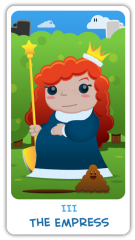
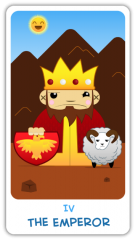
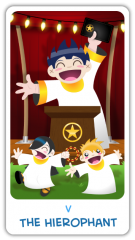
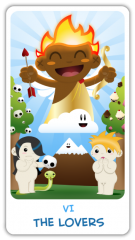
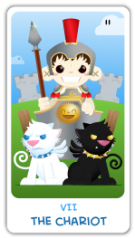
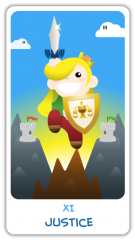
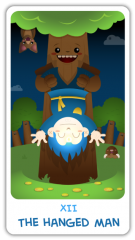
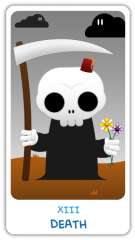
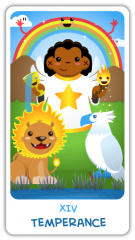
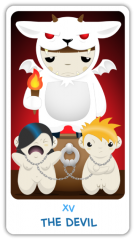
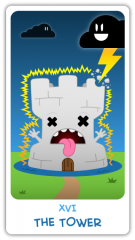
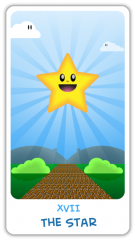
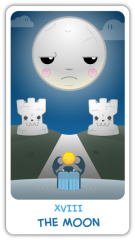
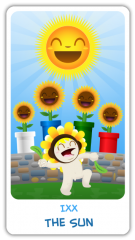
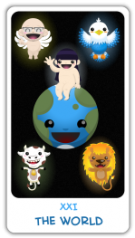
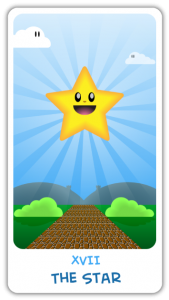
Those are beautiful cards. Them mean the truth and prosperity.(You can see the originals here: The Hanged Man and the Emperor).

Artist unknown. (Scanned from Michael Dummett’s The Game of Tarot.) [Public domain], via Wikimedia Commons
The tarot has a reputation as a difficult and complicated symbol system, a well earned reputation for confusing characters and secret symbols. In reality it is a simple system about asking questions and telling stories about the answers we receive. But since the 19th century the deck has been subverted to serve the ends of a particular group of people. Granted, that group of people, the Victorian occultists, brought a level of sophistication to an otherwise simple deck of cards and for that I’m grateful. But the pendulum has swung too far in the direction of secrecy and mysticism, culminating perhaps in the Thoth Tarot, so laden with symbols and mystical apocrypha that its images, though intensely powerful, are all but indecipherable to anyone but the hardiest of students (despite the best attempts of Lon Milo DuQuette), and Crowley’s book of the same name is an exercise in self-aggrandizing incomprehensibility.
The tarot is a product of medieval pop culture, featuring the stars of the day. Kings, queens, popes, and mythic heroes and heroines that were immediately recognizable to everyone who played the game. It was not an arcane system of cryptic symbols but a series of illustrations that immediately spoke to the players on a number of levels. Nor was the tarot a finalized set of glyphs that everyone agreed upon, but a fluctuating series of illustrations that captured different ways of playing the game as well as different versions and stories behind the cards themselves.
The illustrations in the major arcana were designed to be transparent, not opaque, to communicate clearly and efficiently their values and meanings. That polarity has been completely reversed in the 700 years since the tarot’s inception, both because of the unnecessary layer mystical mumbo jumbo that it’s acquired along the way, and because of the way that the glyphs have petrified, becoming ancient symbols of a bygone era requiring a level of translation that makes immediate reactions nearly impossible. The tarot’s developed into a highly arcane art, to be attempted only by the most learned of sages, who have spent years working with the cards to unravel their most ancient and sacred mysteries, and I think that’s a bunch of baloney.
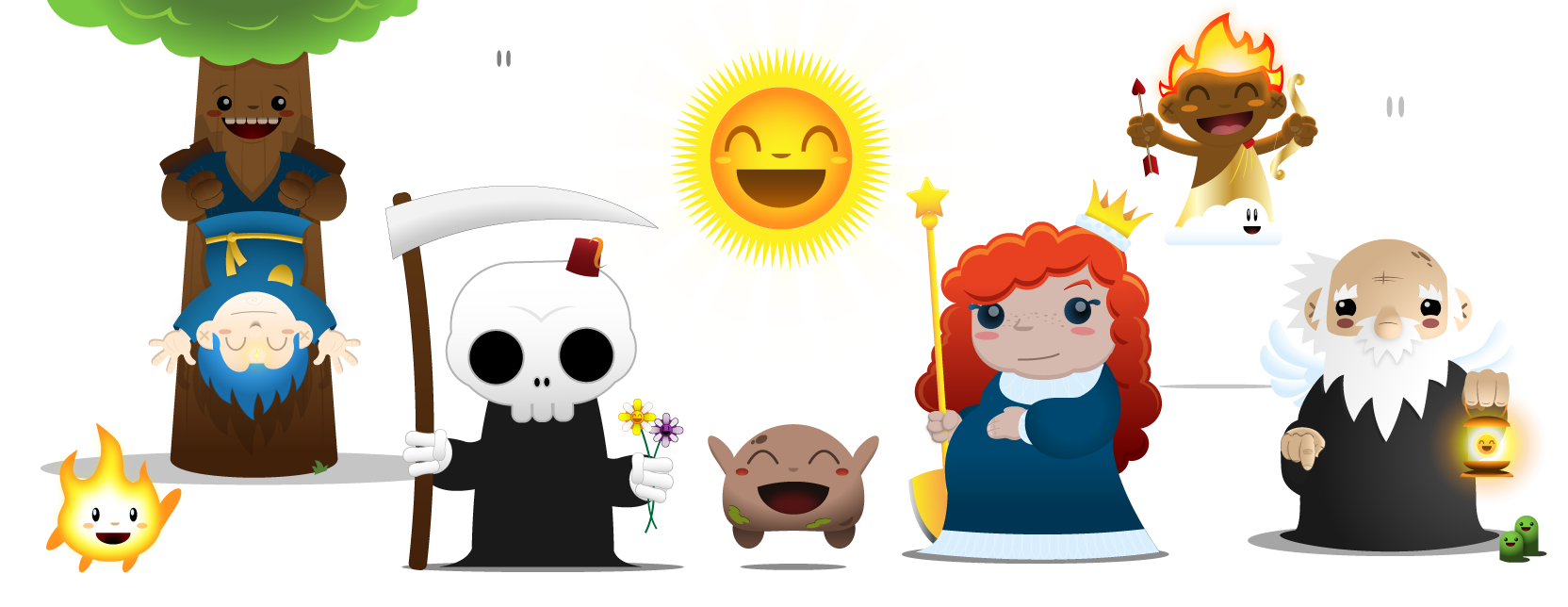
The cards should be immediately recognizable. Whether you subscribe the theory of Jungian archetypes or not, the cards should be accessible and readable to almost anyone in the culture creating the deck, and that’s not the case today. Needing a book in order to sort through the various symbols and signs reneges on the promise of art: that we can immediately enjoy it and take something away from it. Traditional decks have become so laden with a stiff layers of alchemical significance that reading the cards is no longer a joy; the juice has been sucked out by the Serious Work that the artists and writers have embedded into their images. There is a need for fun and the Chibi Tarot is a direct response to that need for fun and joy that the tarot, it seems, has lacked for so long.
I don’t want the tarot to become a kind of esperanto, a broken language so simple that no one would ever want to use it, but I don’t want it to be Klingon either: Incomprehensible and threatening. The tarot should be approachable and infused with the spirit of the culture, a reflection of the people reading the cards. If the deck is an antique whose desiccated symbols require a history lesson to understand and absorb them then the power of the tool has waned. I’m not saying that mystical study isn’t valuable for the initiate who is looking to unlock those secrets and deepen their metaphysical understanding, but to insist on creating purposely opaque veil to obscure the mighty secrets of the tarot from the people in order to protect them from the harm they may do themselves, to play the wizard of Oz and shout in a mighty voice that “We Know Best!” is silly. The tarot is for everyone, it should be approachable and immediately accessible to almost anyone who picks up a deck, the way it was when it began.
I’m certainly not the first to say this. I think Mary Greer has been working tirelessly to encourage and support readers wherever they’re at, to give them the tools to recognize that they already have the information they need, they just need to look long at the cards and trust what they see there, whatever it is. Enrique Enriquez is basically saying the same thing. His naive approach to the cards, to simply lay them down and tell the story he sees there implies that no learning is necessary. Throughout ‘Tarology’ the documentary that follows Enriquez throught New York city as he expounds on the simplicty of the tarot, he consistently implies that we in the tarot world are all making much ado about nothing, that the cards have a simple message for those of us who want to take the time to hear it, and reading a bunch of books on the esoteric history of the tarot might teach you a lot of things, but it won’t help you read the cards better. Only reading the cards will do that.
The truth is that all of us are storytellers; it is our birthright as human beings. Our life is the narrative that we are always weaving together, for good and for ill, for truth and for illusion. Beyond the tale of our own life, we create stories without even thinking, offhandedly deciding things about people we don’t even know based only on the way they look, act and move through the world. Our desire for narrative, for backstory and conclusion is both what makes us great as a people and what can make us petty as people. Harnessing the power of story in conjunction with a series of images loosely tied to mythological archetypes can be a powerful tool for insight into the nature of ourselves and the world around us, one that more people could use in their day to day existence, and one that has been largely obstructed due to the incidental secrecy that wedded itself to the tarot 150 or so years ago.
The tarot is a flexible and multifaceted oracle that was originally built on a premise of instantaneous understanding of symbols involved, and it no longer seems to speak to that. Returning to a simplicity of image and symbol, and bringing the tarot out of the shadows in which it has been comfortable encased is why the Chibi Tarot is here; to return the tarot to the people, the way it started, the way it was meant to be.
Reinvigorating Our Lives with the Mythic Power of the Tarot
Posted by in General Tarot | Mythology - (0 Comments)
I struggle a lot with the use of the tarot. I am not naturally a tarot reader, at least, if I am I haven’t discovered the way that works best for me. I struggle with the phrasing of the question and the structure of the answer that the tarot provides. I struggle with structuring the cards into the shape of a narrative that’s meaningful to the querent, whether that’s me or someone else. The Celtic Cross, that sham of a structure that’s so often foisted on beginners, is clumsy and awkward, a poor way to read, and an even worse way to begin. And yet, I have not found something to take its place. Even the simplicity of 3 card readings escapes me. There is something missing for me still in regards to reading the tarot for others, and despite my limited knowledge of minors and court cards (which makes me uneasy, I’ll admit) there is something else to it.
This morning that I had an insight into the importance of the tarot for our lives, whether it’s something as simple as a card a day or something more complex like an in-depth reading (or creating your own tarot deck and companion book!). The tarot, like so many of the humanity’s storytelling tools, is a lens that allows us to refocus on and reenergize the mythic and heroic aspects of our lives. Reading, drawing or meditating on the tarot allows us access to the millennia-old stories that we have created and collected as cultures, and gives us access to the energy and wisdom that they contain through an instantly accessible visual medium. Reframing our struggle in a mythical/magical context can shift our perspective immeasurably and provide us with answers that we never realized were applicable.
It is so easy to be overcome by the mundane aspects of day to day living that we forget the spiritual, heroic parts of ourselves. The tarot allows us to tell our own story, populating it with legendary characters from all of mythology, and can allow us access, if we allow it to, the powerful magical matrix that surrounds us everyday. It helps remind us that we are heirs to a long and powerful mythic history, full of beauty, tragedy and power that can inspire and guide us as we walk through our seemingly mundane lives, can remind us of the power that we have to shape and influence the lives we lead and the way that we lead them.
That reminder is deeply valuable, and we can find it in many places. The resurgence of fantasy in pop culture, from Harry Potter to Lord of the Rings to the Twilight Saga is, to my mind, a culture struggling to regain its connection the powerful magical traditions that have for so long informed it, but lived outside the walls of acceptable Christian myth. The tarot is a piece of this resurgence and is uniquely placed, because it doesn’t tell a single story, it tells every story. And for those that embrace the tarot’s power and heed its lessons can always return to it for all the wisdom and reassurance that our shared mythic history can provide.
A Serious Post About a Silly Game
Posted by in General Tarot | HWaTF | Joseph Campbell | Major Arcana | Mythology - (2 Comments)
By Jessie Willcox Smith (1863 – 1935) [Public domain], via Wikimedia Commons
For me, the link between tarot and mythology has been tenuous at best. I know this is a strange thing to say. The mythology of the tarot is just beneath the surface of cards like the Lovers, the Tower and the Last Judgement, but tarot as I’ve learned it exists in a tenuous place outside of traditional myth, in a kind of bubble of its own mythology, immersed in a cheap mystique of strip mall psychics, gothy high school art chicks. Add to that its historical association with characters like Aleister Crowley (“the wickedest man in the world” ) and its own dubious history and syncretic melding of an Italian card game with an obscure Jewish mystical sect at the hands of some loopy British spiritualists and it’s certainly difficult to speak on the tarot and be taken seriously.
It is a piece of neither the academic study of mythology and folklore nor an essential piece of any practice of craft traditions. This, combined with our cultural ambivalence towards its use as an oracle (along with our revulsion at the inclusion of such unsavory characters as the devil and the high priestess) has shunted the tarot into a strange place, being neither one thing nor another: It is a step-sister of the occult, too often thoughtlessly tossed in with its cousin the Ouija board as a parlour game not serious enough to be believed, nor artistically stringent enough to be enjoyed aesthetically. Certainly things are changing. There are more tarot decks and practitioners now than ever before, and pop tarot decks like the Super Punch Tarot, the Light Grey Tarot and dare I say the Chibi Tarot show a renewed artistic interest in the power of the tarot’s symbols and the way in which they can converse with pop culture.
But given where the the tarot’s come from, it’s clear why it exists on the fringes of serious mythological study, why Campbell and Jung mention the cards only briefly, as asides, if at all, despite the fact that the cards fit almost perfectly into their systems and reflect clearly the symbols that they deal with in such depth in the rest of their work.
So, because of the lack of existing ties between the tarot and popular mythology, it occurred to me to start creating my own. It was inevitable, I think, writing and drawing my own tarot deck and reading The Hero With a Thousand Faces simultaneously. So I did, but not in an academic way, which would tire me out quickly, but in the form of a simple game that can be played two ways, which I did with my wife on our walk around Capitol Lake yesterday.
The first way to play is to take any number of cards and put them together, then intuit what myth they represent. I’m currently only playing with major arcana, both because my knowledge of the minors and court cards is so limited and because majors represent larger, more common themes (though playing with someone like my wife who’s much more familiar with the minors and court is a great way to learn them). My first attempt that this by myself was the Tower and Judgement, which immediately spoke to me of Joshua and the battle of Jericho.
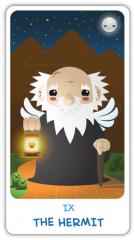
Playing with my wife on our walk we did the Empress and the Devil (Beauty and the Beast), the Chariot and the Moon (Peter Pan), and the Hermit and the World (every Christian monk story ever). The second way to play is to reverse engineer the first way: start with the story, then divine the cards. For Goldilocks and the 3 Bears I chose the five of coins. Little Red Riding Hood was the Empress, Strength/Devil and the Emperor.
It’s an interesting and stimulating way to combine the tarot and mythology in a way that’s accessible and immediate, and doesn’t require anything beyond our own store of stories and our knowledge of the tarot.
So what combinations come up for you? What stories to you always see tarot cards in?
There’s nothing more irritating than starting over. Professional artists do it all the time. Dan Clowes has said that it’s better to redraw an entire page than to regret it when the piece comes out. I don’t like agreeing with him (he’s one of my least favorite visual storytellers), but in this case I’m forced to.
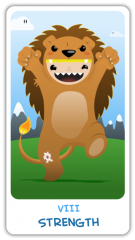
As I was moving into the detail stages of the tarot card 8, Strength, something kept bugging me about it. The pose and the posture irritated me. They were good, but they weren’t good enough. They were just generic. Then, going over the completed cards, I also realized that the little girl’s pose and facial expression were nearly identical to that of the angel in The Lovers.
It’s tempting to say that the limitation of the facile “chibi” form is that I will end up repeating myself, because the form itself is so limiting. That’s twice a lie. I’ll end up repeating myself because it’s inevitable, not because of the form I choose. And the form itself is limitless, the only limitation is myself; if I allow myself to settle for repetition rather than pushing myself into new places, stretching my muscles so that I can be a little bit better than I was last time.
So, I started over. I didn’t want to. I wanted to be halfway done with the card, but although I like the original Strength, I really disliked how similar it was to the lovers. Instead, I imagined my daughter’s “monster” pose. We have a little Bowser toy at home, and whenever she wants to play with it (or really whenever she wants to tell us about monster, be it how her big brother is acting or the dinosaurs on her shirt) she holds her hands up next to her face and does a breathy growl. It’s adorable. So I drew her, in a lion suit, doing her monster growl. And it’s adorable too.
Looking at the sketch I’d done, it was clear that this version also had an earlier predecessor. Anyone familiar with Maurice Sendak’s body of work will recognize the spirit of Max from ‘Where the Wild Things Are’ in this second version of Strength. And I think that’s appropriate, both for its inspiration and for its meaning.
The passage of the mythological hero may be over-ground, incidentally; fundamentally it is inward—into depths where obscure resistances are overcome, and long lost, forgotten powers are revivified, to be made available for the transfiguration of the world. This deed accomplished, life no longer suffers hopelessly under the terrible mutilations of ubiquitous disaster, battered by time, hideous throughout space; but with its horror visible still, its cries of anguish still tumultuous, it becomes penetrated by an all-suffusing, all-sustaining love, and a knowledge of its own unconquered power.As I’ve continued reading, more passages have jumped out in relationship to the tarot. Here are two more pieces referencing the Hanged Man and the Moon (which I found especially powerful and insightful).
The Hanged Man
[The Buddha experiencing perfect englightenment] is the most important single moment in Oriental mythology, a counterpart of the crucifixion of the West. The Buddha beneath the Tree of Enlightenment (the Bo Tree) and Christ on Holy Rood (the Tree of Redemption) are analogous figures, incorporating an archetypal World Savior, World Tree motif, which is of immemorial antiquity. Many other variants of the theme will be found among the episodes to come. The Immovable Spot and Mount Calvary are images of the World Navel, or World Axis.
The Moon
Typical of the circumstances of the call are the dark forest, the great tree, the babbling spring, and the loathly, underestimated appearance of the carrier of the power of destiny. We recognize in the scene the symbols of the World Navel. The frog, the little dragon, is the nursery counterpart of the underworld serpent whose head supports the earth and who represents the life-progenitive, demiurgic powers of the abyss. He comes up with the golden sun ball, his dark deep waters having just taken it down: at this moment resembling the great Chinese Dragon of the Kast, delivering the rising sun in his jaws, or the frog on whose head rides the handsome young immortal, Han Hsiang, carrying in a basket the peaches of immortality…
The disgusting and rejected frog or dragon of the fairy tale brings up the sun ball in its mouth; for the frog, the serpent, the rejected one, is the representative of that unconscious deep (“so deep that the bottom cannot be seen”) wherein are hoarded all of the rejected, unadmitted, unrecognized, unknown, or undeveloped factors, laws, and elements of existence. Those are the pearls of the fabled submarine palaces of the nixies, tritons, and water guardians; the jewels that give light to the demon cities of the underworld; the tire seeds in the ocean of immortality which supports the earth and surrounds it like a snake; the stars in the bosom of immortal night. Those are the nuggets in the gold hoard of the dragon; the guarded apples of the Hesperides; the filaments of the Golden Fleece. The herald or announcer of the adventure, therefore, is often dark, loathly, or terrifying, judged evil by the world; yet if one could follow, the way would be opened through the walls of day into the dark where the jewels glow. Or the herald is a beast (as in the fain’ tale), representative of the repressed instinctual fecundity within ourselves, or again a veiled mysterious figure—the unknown.
I plan to continue to annotate and collect these bits and pieces as they pop out at me and post them here. Enjoy!
I spoke briefly in my comments on Justice about it being the center of the tarot, and I’ve mentioned before about a card’s placement within the first, second or third line of the tarot and I thought that I’d address that for a moment, since I’ve never explicitly explained the meaning behind that train of thought or why I keep using it.
Rachel Pollack, a worthy guide to the tarot if ever there was one, tells us in the second chapter of 78 Degrees of Wisdom, her seminal study of the tarot, that there are two schools of thought on the interpretation of the tarot deck, one that views the cards alone as important and another that views the cards as a specific sequence. Pollack aligns herself with the second group, not only that, but that while the tarot can be neatly divided into two groups of 11, she prefers to discard the Fool, so she’s left with 21 cards easily broken down into three groups of seven. These seven levels of the tarot then form three distinct phases within the journey of the querent. The first line concerns the mundane concerns of society, the second the journey inward to deal with issues of identity and personality, and the third line “with the great forces of life itself,” as Pollack puts it. A less intimidating way of phasing it might external spiritual forces, right up to creation itself in the World card. That’s a big deal, but it’s not an impossible deal.
So that’s the quick and dirty on the seven lines, but not necessarily my take on them. While I find the narrative of the three levels of the tarot intriguing and somewhat useful, the truth is that I don’t believe that each card in the system absolutely needs to be in the place it is, nor that it takes its meaning directly (or even tangentially) from its position. That doesn’t gel for me around the highly idiosyncratic nature of the tarot, nor of the nature of divination or the usefulness of other oracles, such as the Lenormand cards, The Faerie Oracle or even the incredibly odd Cards of U’ut. The tarot is a malleable system of articulation, a necessarily malleable system. Without its inherent flexibility the tarot would be far less popular and even less accessible than it already is.
Most importantly, the idea that each card must come in a certain order contradicts the very way that most folks use the tarot. It may well be that most diviners are mis-using the tarot, breaking it down from its enlightened purpose as a guide to enlightenment, but I strongly disagree with that. The way that the tarot is most often used is to shake up the cards and lay them out of order for more insight into a particular dilemma. The Emperor is suddenly shoulder to shoulder with the two of cups and the seven of swords, but he doesn’t lose any of his meaning from this positioning, in fact he gains greater meaning from it, more useful meaning than he had in his traditional position.
Sure, you might say, that’s true, using the tarot for divination is one thing, but the order IS important and we shouldn’t mess with that; it’s been specifically developed over centuries in order to accurately reflect the human condition. Well…no, not really. Historically there have been a number of versions of the tarot streaming out of Italy and then France. The version that we’ve received has had a very specific path, from Italy, to Marseilles, France to London and into the hands of AE Waite and the Golden Dawn. From those 18th century western occultists we received our tarot canon. But beside historical precedence for alternate tarots and alternate versions of this tarot, there is also the question of where the magic happens, and that, to me, is the greatest argument against the importance of traditional card position. For me, the magic is not in the cards. In fact, it’s my belief that no artifact can contain magic, only channel it. The magic is in the reader, the human holding the cards, and the cards help us focus and clearly reflect that energy back at ourselves in a coherent way.
A deep part of the magic of the tarot is learning how to tell the stories it has the potential to create, stories about ourselves and the people around us. The story that Pollack tells around the 3 levels of tarot is just one more story, just one more alignment of the cards. Learning to tell those stories is the important thing, and having a tool to construct the stories is important, but it’s not necessary: the story is going on all around us, but it’s a lot harder to simplify, condense and make sense of when we’re trying to draw it straight from life than it is when we draw it from the cards. I believe that no matter what the original, “authentic” position of the cards humans would find a way to make a story out of them, and that story would make sense. And we do, every time we divine with the cards we find a new way of telling that essential human story over and over again: what’s happening in my life? This is what Enrique Enriquez talks about in Tarology, how to let go of everything you might think you’re supposed to know about tarot and simply look at the pictures and then tell the story you see. And that, in and of itself, is the power of the tarot: learning to trust ourselves.
Learning to get out of our own way and really trust the deep intuition that we’re born with. Learning to listen to and hone that intuition that has, for most of us, been derided, demeaned and ignored for a long damn time. Connecting to and nurturing that voice is difficult, scary and challenging on every level of my life. It often makes me look crazy: moving to Wales and starting my own business so my wife could pursue a PhD in theology didn’t really look as though it had “solid life decision” written all over it, but it’s worked out a lot better than I suspect most folks thought it would, and more importantly it’s led me down a path that I would NEVER have been able to replicate if I’d just done what other folks thought made logical sense, and it’s taught me over and over again to trust myself first, no matter what the logical decision might be.
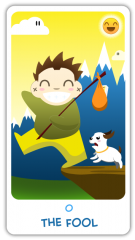
The conclusion that I’m about to draw flies in the face of everything I’ve just said, but perhaps there’s a reason why, despite being a wild card and a floating trump, the Fool has settled at the beginning of the tarot. Its lesson is by far the most important lesson that I know in reading, studying or creating the tarot: Trust yourself first and everything else will fall into place. Finding that voice is difficult, and there are consequences we cannot foresee, wounds we have ignored that will need tending, and powers we didn’t know we had that will need tempering. But there is no more satisfying feeling than knowing that voice, trusting it and seeing it through, whether its something as simple as a tarot reading or as powerful as taking control of your own life.
The Hanged Man and the Material World: Or the Time I Gave Away a Car
Posted by in Uncategorized - (2 Comments)My own traditional interpretation of the hanged man and his coins has always been that he lost them upon inversion; that the hanged man symbolizes the process of losing the coins as they bounce painfully down into his face and chin, then struggling fruitlessly against our bonds for the return of the comfort of our material things and eventually, perhaps even after exhaustion, finding peace and perhaps enlightenment. The focus in that interpretation is coming to terms with a difficult and uncomfortable situation where things are out of our control, which I think is valid, but may be missing another way of looking at it. What if, instead of the Italian ‘Il Traditore’, the traitor, who’s been strung up against his will, we see a holy man who chose first to empty his pockets and then climbed onto the tree? The shift is subtle, but important, the crux of it being that the hanged man couldn’t be hung until he emptied his pockets; that the choice to let go of something that is holding us back or down, be it material wealth or even a dysfunctional emotional or spiritual relationship is a prerequisite for enlightenment (heavy on the lighten). That the tree isn’t the difficult situation, it’s the reward. Being weighed down, illustrated in the moment before the Hanged Man takes place, a moment forever invisible to us, is truly the difficulty, and that inversion is the reward, one we can’t achieve until we intentionally lighten our load.

My 2003 VW Passat 5 Cylinder
It still wasn’t easy. It turns out that five cylinder sedans are somewhat unpopular in the rural UK: they use too much gas and don’t have four wheel drive. So the first two people that I asked turned me down. I wanted to give them a £3,000 car and they wouldn’t take it. Finally, a friend of my wife’s who’d been looking for a car agreed to take it. Her husband met us at our hotel near the airport, along with the proper documentation to sign over ownership and the night before we left the UK he drove away with my car. I was sad to see it go; it had been the first car I’d ever bought and I loved driving it, and I did miss it. But letting go of it was the best choice: it allowed me to move forward, to fly away the next day and continue my journey. Holding on to it, clinging to the cash it might have generated, would have been much more exhausting, and choosing to let go was definitely the right thing to do.
What are you holding on to that you can let go of? What have you let go of that allowed you to be “en-lighten-ed”?
It’s been two months since the Chibi Tarot Kickstarter was funded, but for me it’s still not entirely real. I don’t think that’s simply because the cards aren’t in my hand. There’s enough art and momentum at this point that the project is very real. I think that’s because I have a hard time taking credit for my work without external validation. It doesn’t feel like it’s mine, despite all the hard work that I’m putting into it. It doesn’t resonate with me, despite knowing that if someone else was doing this deck I’d be super-stoked for it. This is a personal difficulty I have, a piece of the Work that the Chibi Tarot is a big part of. It’s summed up nicely by an old joke Woody Allen joke that he’d never be a member of a club that would have him, and that’s incredibly true for me.
That there’s still a doggedly persistent part of me that’s in love only with the things I can’t have. When it turns out that being an artist is more about keeping at it than it is about transcendent moments with the divine, a bit of the sheen wears away, and since the Kickstarter ended I think I’m still sitting with that. I want the thrill of divine validation: the hand of god descending from heaven to mark me out from the masses. And that’s what I was hoping the Kickstarter would be: god’s message that this project is destined to succeed.
I know, listening to myself, how foolish that sounds. It’s silly to believe that could/would/will happen, but that didn’t stop me from wanting it, even without knowing that I wanted it. That’s the unconscious expectation that I went into the Kickstarter with. Not that it would succeed without work, I busted my ass the entire month (though in two very different ways) to make it happen, but that it would succeed virally; that as I began to put the word out, the world would catch fire with an idea whose time had come, and when that didn’t happen I got very depressed.
I didn’t go into the Kickstarter thinking I was going to fail. Armed with hard work and a great idea that was becoming a great product, a world overflowing with geeky consumers, and being well connected to both pagan and artistic communities, I couldn’t see how I could fail to find an audience. But the audiences I thought I had access to and feeling for turned out to be almost completely uninterested in the product I presented. Where I thought I’d found a nice geeky niche ripe for exploitation, I instead found a small row much in need of hoeing, and I wasn’t expecting that.
As donations to the Kickstarter flat-lined near the end of the second week of the campaign, I found myself at a loss; I’d expected this to be a commercial success, and when it wasn’t I didn’t know what to do, except be depressed, morose and mope around trying to come to terms with impending doom. It was not a great feeling. I didn’t know what to do next, I felt I’d reached the end of my rope and had no tools left in the bag, to mix a lot of metaphors. I felt I’d already irritated all of my close friends and family to the point of snapping (which wasn’t true at all) with my constant posting, updating and inquiring; submitting the project to blogs wasn’t getting a good return at all (about 1 in 10 got back to me about promoting the project); I’d had no strong inqueries from any one group, and so I felt really had nowhere left to turn to drum up interest. I just had to watch the last 11 days tick past as I stagnated across the finish line.
Like I said, it was a dark time.
Then, during meditation one evening near the end of the second week, I’d finally generated enough distance to see my own assumptions for what they were and realize that I’d unconsciously assumed that the Kickstarter to be commercially successful; that I’d expected others to do the heavy lifting of promotion and the hardest part for me would be developing stretch goals as the cash rolled in. When I finally articulated this previously hidden expectation I’d had, I also realized that there was another method to getting across the finish line successfully. Instead of depending on the commercial model to deliver me, I could instead use the non-profit, grass roots method of fund raising: The personal ask.
In order to do this, though, I had to risk even more in my personal relationships by being direct about asking for money and for help from close friends and family. This was incredibly difficult for me. I already felt like a burden to those around me, a pest whose pet project was clearly not worth funding (if it was, it would already have been funded, and I wouldn’t have had to ask for help or money, obviously) and that I was just too stupid to realize it. In order to risk that kind of disappointment I had to ask myself one question: did I really want to do this?
You might think that the answer to this question is implicit in the art work and the Kickstarter, but for me it wasn’t. There are a variety of ways to develop and promote a project like this, and the self-promotion, self-publishing crowd sourced model developed through Kickstarter is just one of myriad ways I could have gone with it, but as a perfectionist control freak, this method greatly appealed to me. And I could have stopped there, deciding that the Kickstarter was just a failed litmus test, and that there truly was no market for my product, so why keep going?
So, I asked myself, sitting in my dark basement on my meditation cushion: Do I want to do this? The answer I came to was yes. Yes, I do want to do it. The risk was worth the reward.
So I stood up and quickly made a list of 20 of my closest friends and family and I wrote two form letters that I could personalize individually. The first letter went out to folks who’d already given to the campaign and asked them to reach out to five people they knew who were either mutual acquaintances or who they thought would be interested in the project, and ask them personally to give money to the Kickstarter. The second letter went out to folks who hadn’t given, asked them directly to give me money (an incredibly difficult thing for me to do. It’s one thing to ask strangers to buy candy bars to support little league, and another thing entirely to ask friends and family for cash for my personal project), as well as ask five of their friends to give as well. With great trepidation I sent the very first letter to my brother, who I felt was the safest person I could ask since I thought it highly unlikely he’d disown me over it. After the first five letters they got less difficult, but I won’t say it was ever an easy thing for me to do.
Being able to change my approach, pivoting, saved the campaign. I was able to get more support from casual acquaintances through my own personal asks and the personal asks of my close friends than I was able to do through more traditional promotional methods. Not one of the people I emailed disowned me or even complained about the letters, but many of the folks did give, and their friends also gave, and that infusion was crucial to my success, getting 109% funded.
However, because of my own faulty emotional wiring, that success still felt very hollow. Ironically, it was all the hard work that I did to succeed that was proof of my failure. If I was divinely blessed, as I’d hoped to be, none of that would have been necessary. Clearly there’s still a part of me that’s having a hard time letting go of that desire for divine love/attention/validation for this project (for my life, really). Even as I am transitioning from believing that god will help those he’s chosen, to believing that the gods help those who help themselves, the emotional perspective I still experience the Kickstarter from is still one of disappointment. It’s maddening to have achieved something so important, so improbable and still be unable to use it as an emotional touchstone for success and confidence. Instead it remains a reminder that I’m not loved by god the way that I want to be, even if that type of love is unhealthy and I know it. The only way to move beyond that is to reteach myself about how to achieve god’s love (if it’s something we can even achieve, perhaps I even need to take a step back away from the entire concept…), and to learn how to love myself kindly and compassionately. These are wonderful words, and I strive to embody their concepts, but their reality still seems a long way off.